Ford
Capri Collection
“A trip back in time, the good way”
1. Design & First Impression: A Familiar Name, A Very Different Car
The name Capri comes with quite a bit of history, so turning it into an electric SUV was always going to create opinions. Once you stop comparing it with what the badge used to mean, though, the new Capri starts making much more sense on its own.
It feels modern, clean and a little more distinctive than many electric family SUVs without becoming overly complicated. The Collection version in particular has enough visual personality to feel like more than simply another practical EV, and that becomes an important theme with this car: underneath, there is a lot of familiar Volkswagen Group technology, but Ford has worked hard to give it its own character.
For us, the Capri works best when you judge it for what it is today rather than what its name used to represent: a spacious electric family car with a slightly sportier personality.
2. Interior Space: This Is the Capri’s Big Party Trick
The amount of space between the two seating rows genuinely surprised us.
At 1.86 metres tall, I can set the driver’s seat comfortably for myself, move directly into the seat behind it and still have a surprising amount of space between my knees and the front seat. Not just “technically enough” space either — there is room to actually relax.
That makes a huge difference if you regularly travel with four people. Two adults and two children are obviously no problem, but the Capri is one of those cars where we would also happily start a longer journey with four adults.
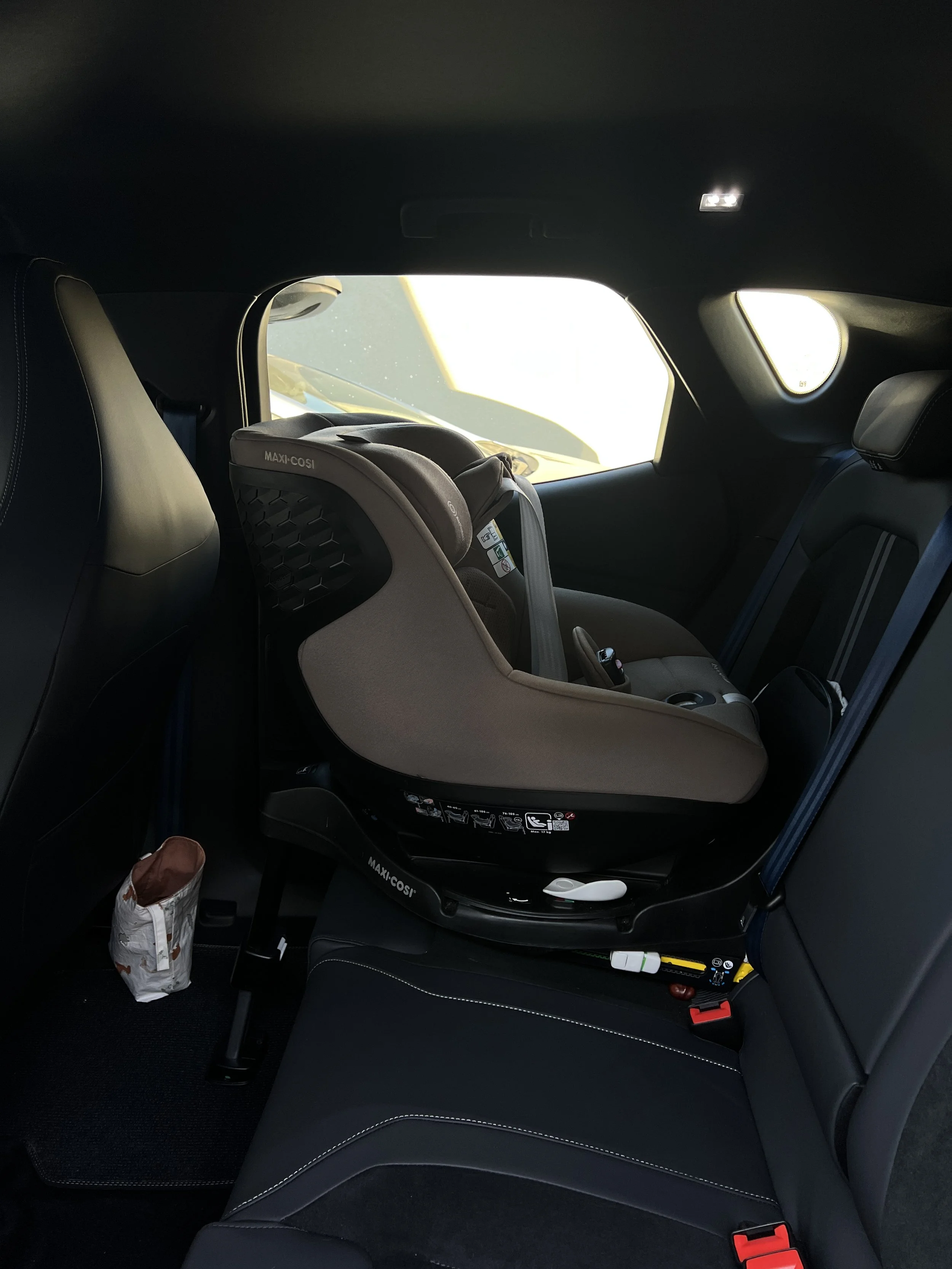
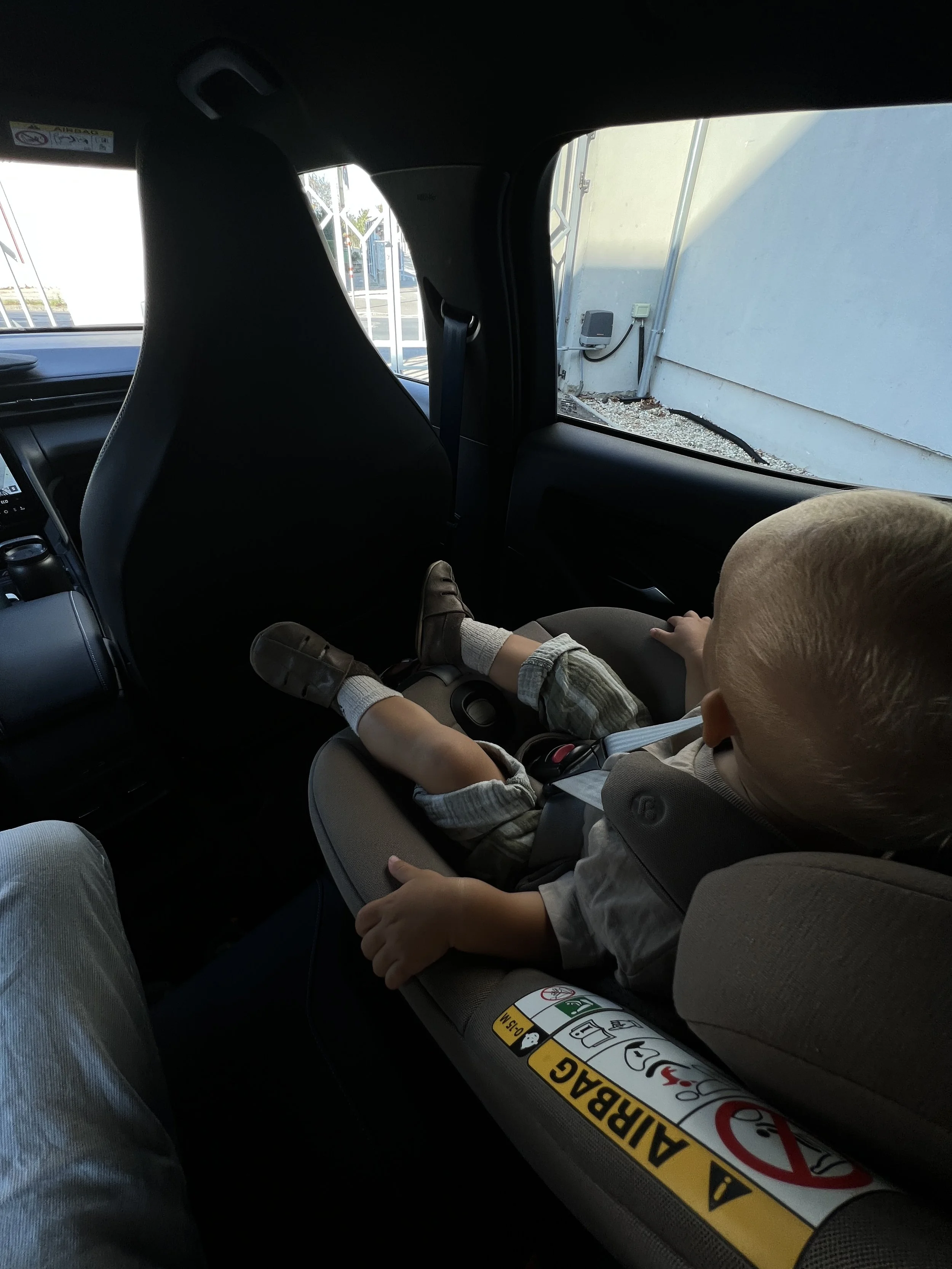
For family life, that extra space becomes even more useful. A rear-facing child seat does not immediately force the person in front into an uncomfortable seating position, and as children grow there is enough room that the back should continue to feel comfortable rather than becoming something you eventually outgrow.
It is probably one of the Capri’s strongest arguments as a family EV.
3. The Volkswagen Connection: Sometimes Hard to Hide
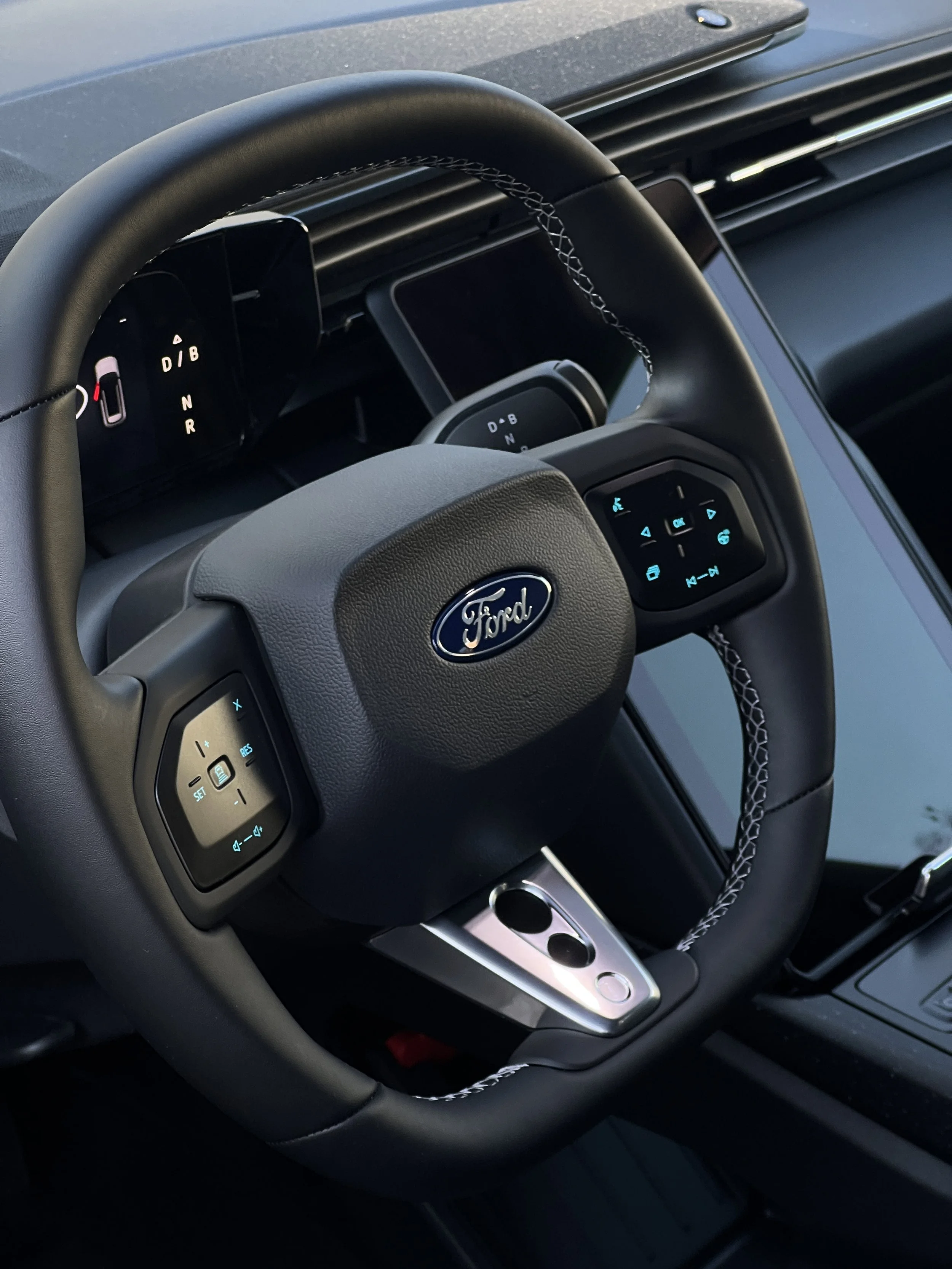
There is no point pretending the Capri was developed completely independently from the Volkswagen Group technology underneath it. You notice the relationship.
Certain controls, displays, menus and the general architecture feel familiar if you have spent time in Volkswagen’s electric models. That is not automatically a bad thing — there is a lot of solid technology underneath — but there were moments where we wished Ford had been given even more freedom to make the car completely its own.
And to Ford’s credit, they have done a good job with what they had. The Capri does not simply feel like someone changed the badge and redesigned the body. The styling, driving character and overall presentation give it its own identity. But every now and then, something underneath reminds you where the basic platform came from.
Our feeling is less that the Volkswagen foundation hurts the Capri and more that it occasionally limits how far Ford could have taken it.
4. Driving & Performance: Exactly Enough
This is one of those electric cars where the performance fits the purpose very well.
There is plenty of power available when you need to merge, overtake or simply enjoy an empty stretch of road, but the Capri never feels like it is desperately trying to prove how fast an EV can be. And we like that.
For a family car, instant electric response is more useful than huge performance figures anyway. With people, a stroller and luggage on board, being able to accelerate confidently onto a motorway matters far more than winning a traffic-light race. The Capri feels strong, effortless and predictable. The performance is there when you ask for it, but it does not dominate the entire personality of the car.
For us, that makes it a very approachable first family EV.
5. Visibility: One Small Thing You Need to Get Used To
There was one aspect of the driving position that took some adjustment.
The combination of the A-pillars and exterior mirrors creates a relatively large visual area at the front corners of the car. Depending on the junction or situation, it can partially hide what you are trying to see toward the front-left or front-right. It is not something that made the car difficult to drive, but during the first few days we definitely noticed ourselves moving our heads a little more than usual when approaching certain intersections.
The assistance systems reduce the problem considerably, and once you become familiar with the car it fades into the background. Still, when a car is mainly going to be used around schools, pedestrian crossings, car parks and busy town centres, visibility is something we pay attention to.
Not a deal-breaker. Just something worth knowing before your first drive.
6. Regeneration: Sarah Would Like an Off Button
This was Sarah’s biggest frustration with the Capri. She prefers an electric car that can coast very freely when she lifts off the accelerator. In the Capri, we could not find a setting that gave her the completely neutral feeling she prefers. The available regeneration behaviour always felt slightly stronger than she would personally choose.
This is very much a matter of preference. Some drivers absolutely love stronger regenerative braking because it reduces how often they need to use the brake pedal. Others prefer to manage deceleration themselves and let the car roll whenever possible.
Sarah falls firmly into the second group.
It did not ruin the driving experience, but because it affects something you feel every single time you lift your foot from the accelerator, it became one of those small details that kept coming back during our time with the car.
We would simply like to have more choice.
7. Family Practicality: Four People Really Can Travel Here
This is where the Capri starts to make a lot of sense.
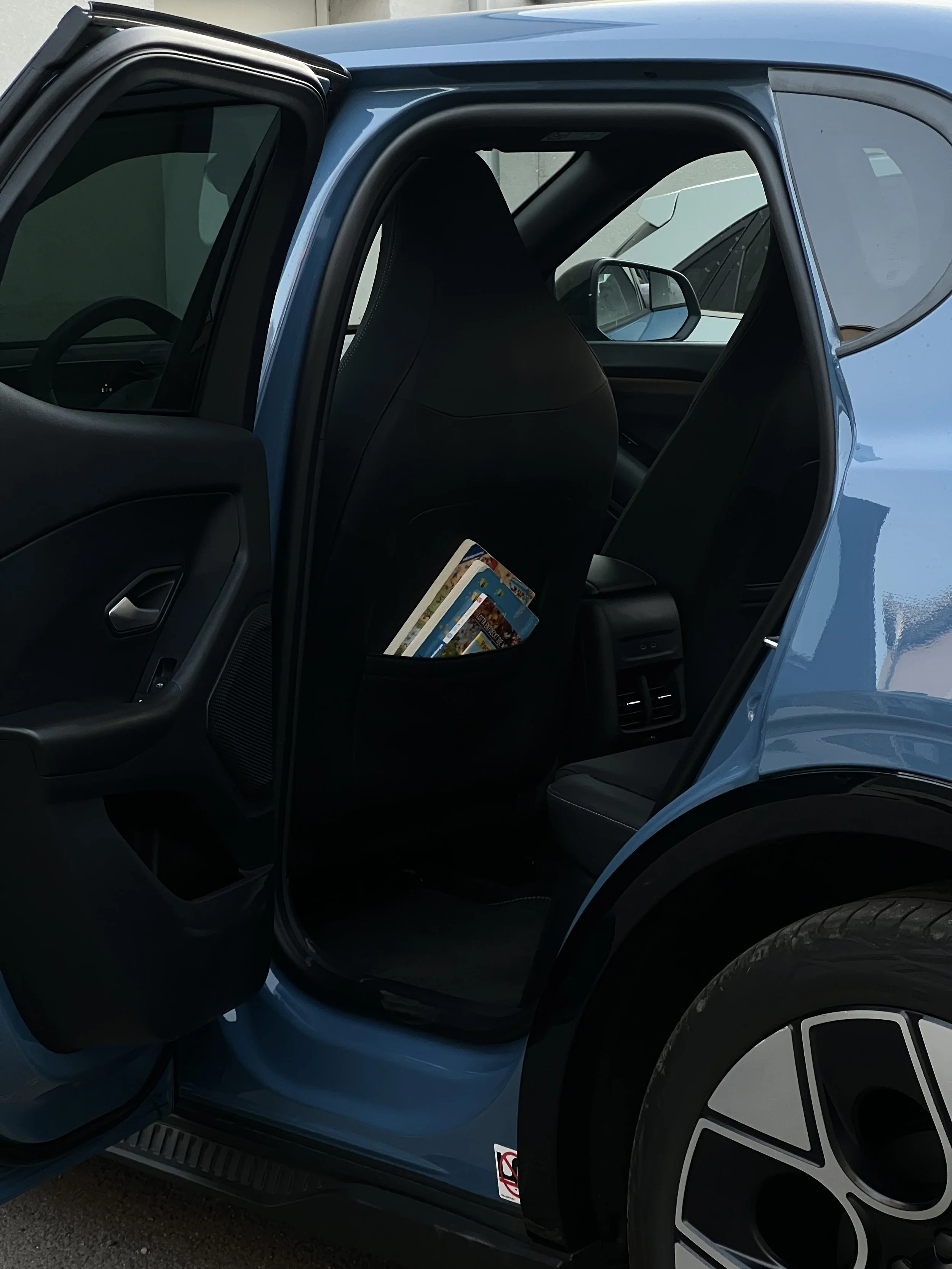
The generous second-row space is only one part of it. The whole cabin feels like it was designed with actual everyday use in mind. There is enough room around a rear-facing child seat, enough storage for the usual collection of small family things and a boot that works properly for a stroller plus normal luggage.
That combination matters more to us than simply having the biggest possible boot on paper.
A good family car should not make you rearrange everything every time you want to take a day trip. You should be able to put the stroller in, add bags, close the boot and leave.
The Capri manages that well.
And because the rear is genuinely spacious, we would see it working equally well for a family of three or four. Even with older children — or two additional adults — the second row does not feel like the compromise seat.
That makes it especially interesting for families who want one car to handle both everyday life and proper road trips.
8. Range & Charging: Nothing Dramatic — In a Good Way
The best thing we can say about the Capri’s electric side is that it quickly becomes something you stop thinking about.
Performance is good, consumption felt appropriate for the size and power of the car, and charging works at the kind of speed we would expect from a modern family EV.
There was never a feeling that you constantly needed to protect the remaining battery or build an entire day around charging.
For us, that is exactly where electric family cars need to be.
Especially with a toddler, a road-trip charging stop is rarely just a charging stop anyway. By the time everyone has been to the bathroom, someone has eaten something, coffee has been found and a small person has explored a completely unremarkable patch of grass for fifteen minutes, the car has had plenty of time to do its part.
The Capri feels like an EV you can simply use.
And if a family is considering switching to electric for the first time, that lack of drama is probably one of its biggest strengths.
9. Final Thoughts
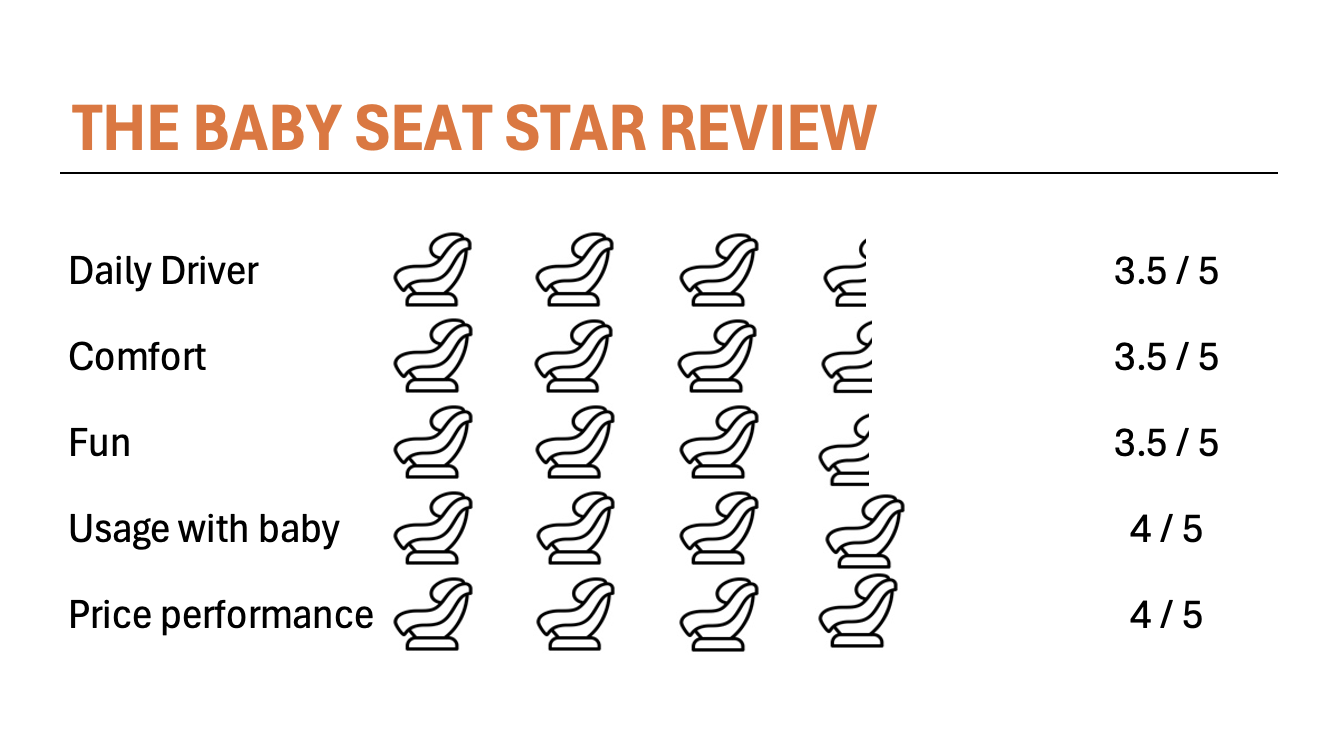
The Ford Capri Collection feels like a very good entry point into electric family life.
It does not reinvent the electric car, and occasionally its Volkswagen Group foundations are more visible than we would like. We also needed some time to adjust to the visibility around the A-pillars, and Sarah would absolutely add a proper free-coasting option to her personal wish list.
But those criticisms sit next to some very strong fundamentals.
The interior space is excellent. Four people can genuinely travel comfortably. A rear-facing child seat works without destroying front-passenger space. There is enough room for normal family luggage, the performance feels exactly right and both consumption and charging fit the way we would actually use the car.
Most importantly, it does not make electric driving feel complicated.
Get in, load the child, throw the stroller in the back and go.
That simplicity makes the Capri easy to recommend to a family that wants to move into an EV without immediately jumping into something huge, extremely expensive or unnecessarily complicated.
It may share some of its foundations with Volkswagen, but Ford has done enough to make the Capri feel like its own car.
And underneath all the discussion about the name, the platform and what a Capri should be, there is something much more useful:
a genuinely good electric family car.